http://www.etsy.com/shop/mexicancolors?section_id=7139005
Showing posts with label halloween. Show all posts
Sunday, October 24, 2010
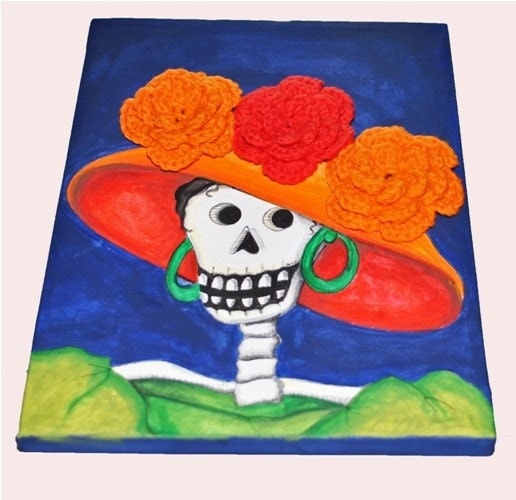
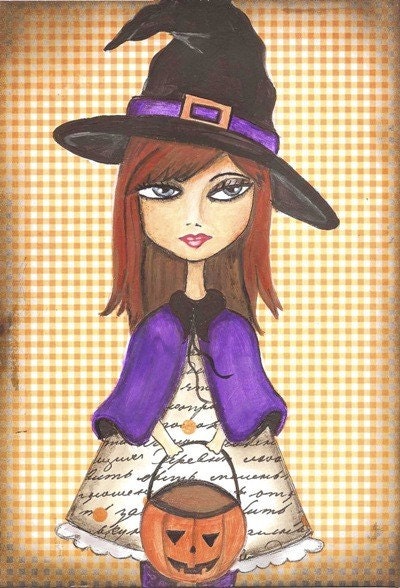
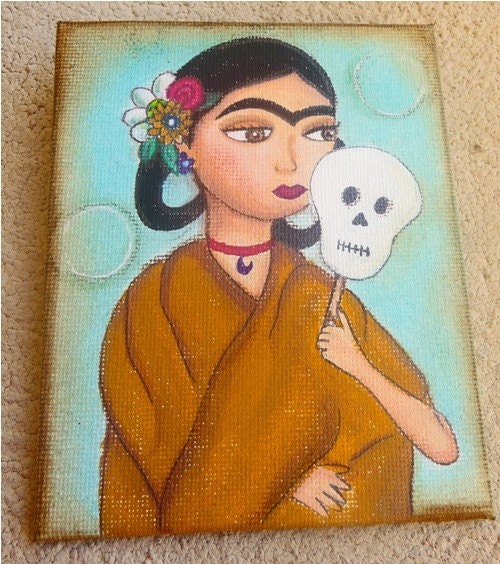
Halloween sale SO SPOOKY!!!
From today October 24 until Ocotber 31 ALL my prints are $10 (orig. $12) and original paintings 10% off with Halloween theme, so you can decorate with this great art works your walls.
http://www.etsy.com/shop/mexicancolors?section_id=7139005
Monday, October 11, 2010
Why we celebrate Halloween?
They other day my daugther asked me: "Why we celebrate Halloween?". And my face was like uh??? I really don't know!. I came of a different culture and we have been celebrating halloween years ago but our creepy celebration is The day of the death, so I looked on internet just to learn more about this holiday and explain to my daughter why we celebrate halloween.
Halloween has its origins in a roman festivities of Pomona, the godess of fruits and seeds and in the Celtic festival of Samhain. The feast celebrates the end of the "lighter half" of the year and beginning of the "darker half".
The ancient Celts believed that the border between this world and the Otherworld became thin on Samhain, allowing spirits (both harmless and harmful) to pass through.
The word Halloween is first attested in the 16th century and represents a Scottish variant of the fuller All-Hallows-Even ("evening"), that is, the night before All Hallows Day.
Trick-or-treating is a customary celebration for children on Halloween. Children go in costume from house to house, asking for treats such as candy or sometimes money, with the question, "Trick or treat?" Trick-or-treating resembles the late medieval practice of souling, when poor folk would go door to door on Hallowmas (November 1), receiving food in return for prayers for the dead on All Souls Day.
Costuming became popular for Halloween parties in the US in the early 20th century, as often for adults as for children. The first mass-produced Halloween costumes appeared in stores in the 1930s when trick-or-treating was becoming popular in the United States.
Today I learnt something new, even if my little girls wear a costume I was ignorant about what we were celebrating.
Halloween has its origins in a roman festivities of Pomona, the godess of fruits and seeds and in the Celtic festival of Samhain. The feast celebrates the end of the "lighter half" of the year and beginning of the "darker half".
The ancient Celts believed that the border between this world and the Otherworld became thin on Samhain, allowing spirits (both harmless and harmful) to pass through.
The word Halloween is first attested in the 16th century and represents a Scottish variant of the fuller All-Hallows-Even ("evening"), that is, the night before All Hallows Day.
Trick-or-treating is a customary celebration for children on Halloween. Children go in costume from house to house, asking for treats such as candy or sometimes money, with the question, "Trick or treat?" Trick-or-treating resembles the late medieval practice of souling, when poor folk would go door to door on Hallowmas (November 1), receiving food in return for prayers for the dead on All Souls Day.
Costuming became popular for Halloween parties in the US in the early 20th century, as often for adults as for children. The first mass-produced Halloween costumes appeared in stores in the 1930s when trick-or-treating was becoming popular in the United States.
What sets Halloween costumes apart from costumes for other celebrations or days of dressing up is that they are often designed to imitate supernatural and scary beings. Costumes are traditionally those of monsters such as vampires, ghosts, skeletons, witches, and devils, or in more recent years such science fiction-inspired characters as aliens and superheroesToday I learnt something new, even if my little girls wear a costume I was ignorant about what we were celebrating.
Thursday, September 30, 2010
Thursday of Mexican Colors Update: My pencil sketches
This post it has to be done on wenesday, but yesterday was a busy day: volunteering in my daugther's school and taking pictures of my products of my other etsy store (soCuties).
Last week I painted a cute painting inspired in the famous surrealist painting of Remedios Varo: Papilla Estelar.
Remedios Varo was born in Angles, Spain, in 1908 and traveled when young with her father throughout Spain and North Africa. She acquired an early interest in mathematics, mechanical drawing, and fantastic locomotive vehicles from her father, a hydraulic engineer.
Varo attended convent schools and at the age of 15 attended the Academia de San Fernando in Madrid where she learned about Surrealism. Varo was attracted to the idea of expressing her emotions using figures and symbols. Later in Barcelona she met the Surrealist poet Benjamin Peret and together they moved to Paris, joining the Surrealist movement in France. In Paris, with the stimulating company Varo's work matured into a personal voice that was original and provocative.
Varo and Peret moved to Mexico to escape the war in 1942 and Varo settled there for the rest of her life. In 1956 Varo had her first one woman exhibition at the Galeria Diana in Mexico City. She had a retrospective at the Museo de Arte Moderno in 1971 and drew the largest audience in the history of the museum. Many of Varo's paintings reflect her early fascination with science and instruments. They embrace a fascination with the workings of the universe and the inner world of fantasy, invention, and dreams.
Last week I painted a cute painting inspired in the famous surrealist painting of Remedios Varo: Papilla Estelar.
Remedios Varo was born in Angles, Spain, in 1908 and traveled when young with her father throughout Spain and North Africa. She acquired an early interest in mathematics, mechanical drawing, and fantastic locomotive vehicles from her father, a hydraulic engineer.
Varo attended convent schools and at the age of 15 attended the Academia de San Fernando in Madrid where she learned about Surrealism. Varo was attracted to the idea of expressing her emotions using figures and symbols. Later in Barcelona she met the Surrealist poet Benjamin Peret and together they moved to Paris, joining the Surrealist movement in France. In Paris, with the stimulating company Varo's work matured into a personal voice that was original and provocative.
Varo and Peret moved to Mexico to escape the war in 1942 and Varo settled there for the rest of her life. In 1956 Varo had her first one woman exhibition at the Galeria Diana in Mexico City. She had a retrospective at the Museo de Arte Moderno in 1971 and drew the largest audience in the history of the museum. Many of Varo's paintings reflect her early fascination with science and instruments. They embrace a fascination with the workings of the universe and the inner world of fantasy, invention, and dreams.
Feeding the moon by Mexican Colors
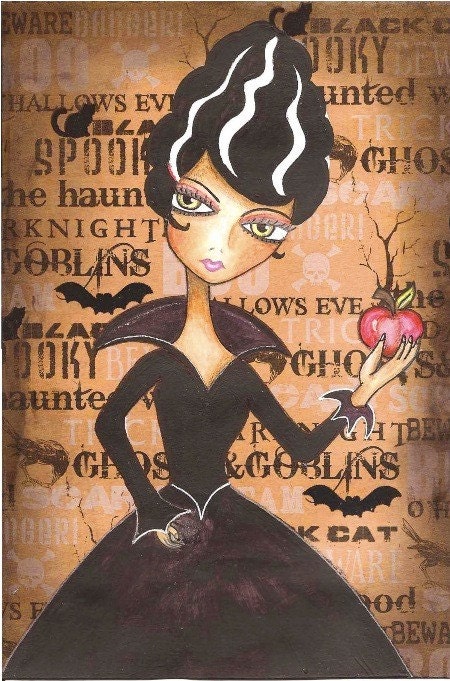
Also I sketch new ideas for Halloween paintings, I hope I could finish them for next week:
Brujita
Mrs Frankenstein
Subscribe to:
Posts (Atom)